Software Engineering Case Study
idte.dev — The Studio's Own Engineering Showcase
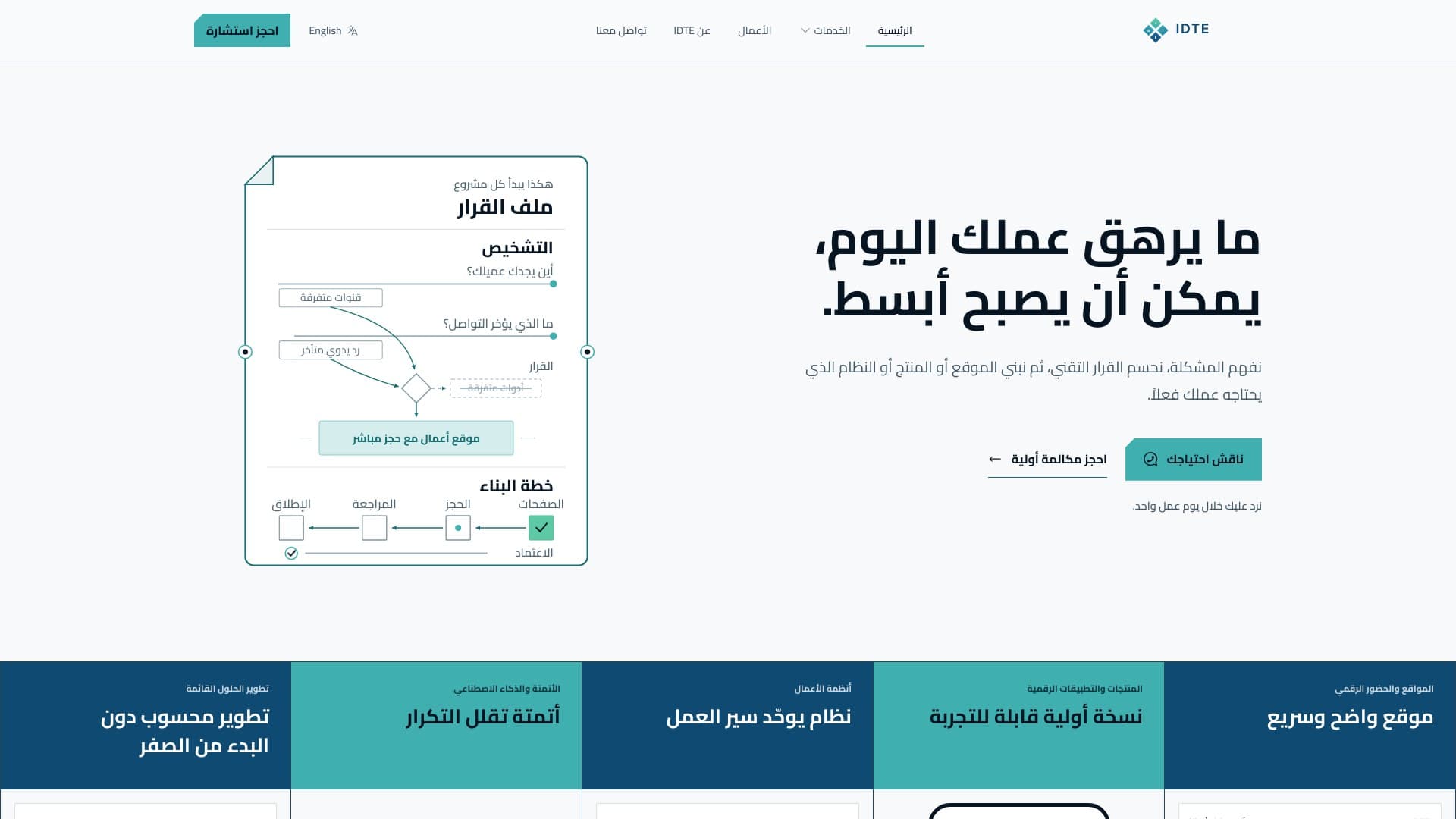
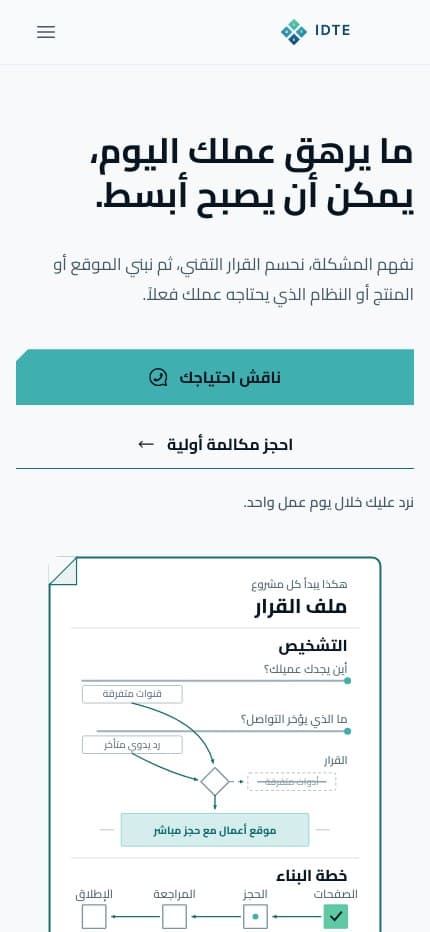
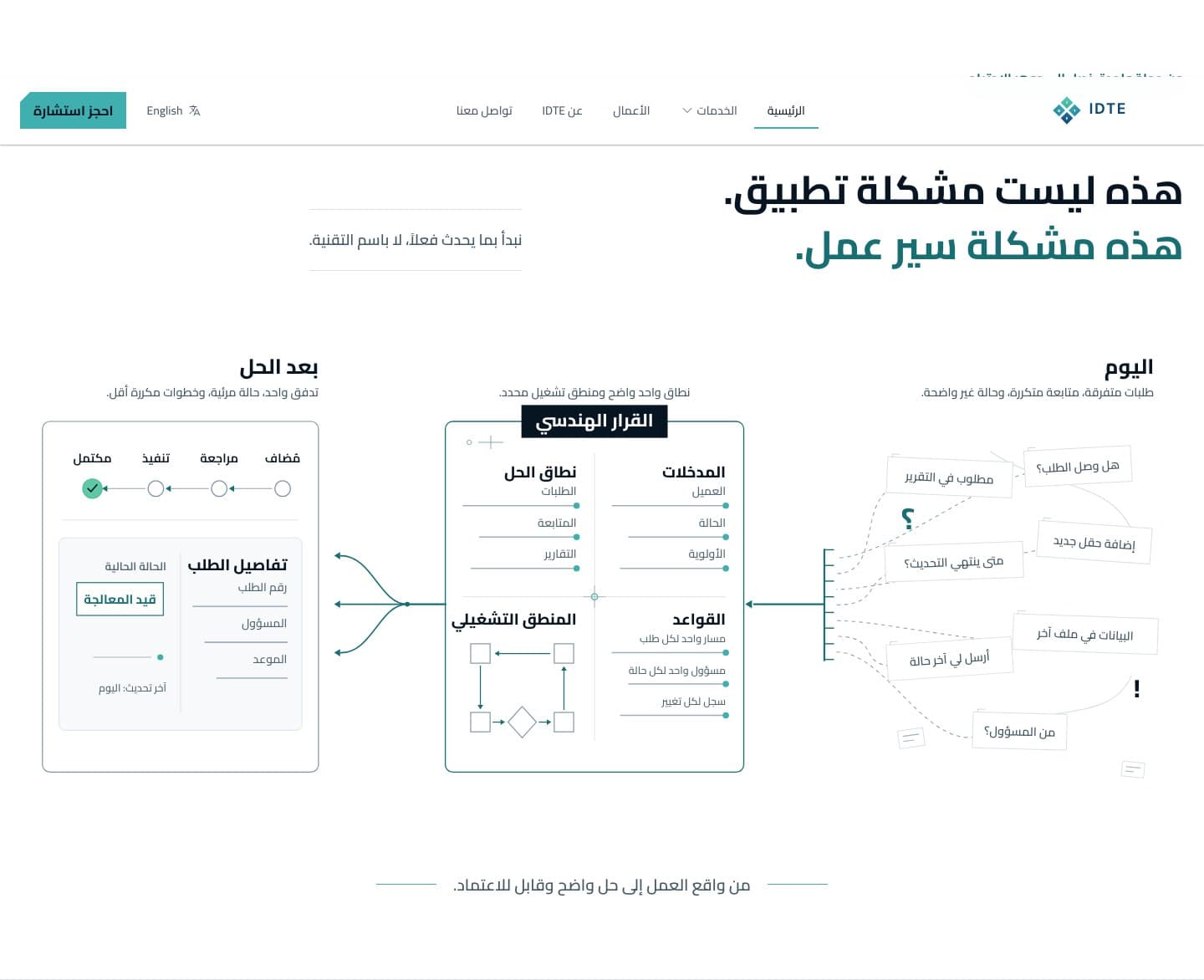
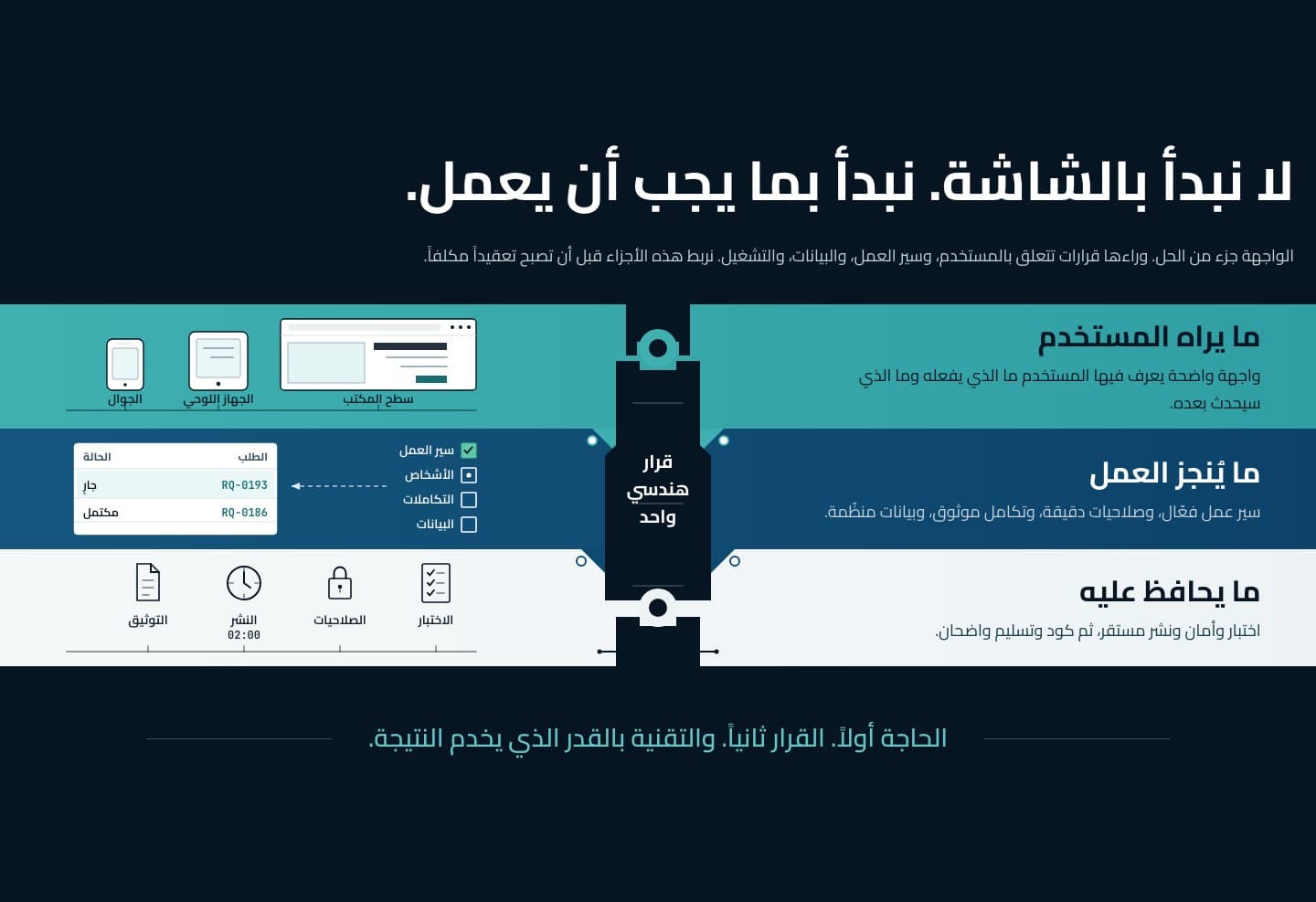
A studio that sells engineering must prove it on its own site. idte.dev was built Arabic-first with full English mirroring — every layout, drawing, and reading direction engineered for both languages, not translated after the fact. The visual language is drawn, not stocked: the homepage decision scene and system map are pure hand-coded SVG compositions with separate desktop and mobile viewBox layouts, so nothing breaks when the screen shrinks. The site also ships a complete AI-readable channel: a clean Markdown mirror for every page at its own URL, llms.txt and llms-full.txt indexes, per-page Open Graph cards, and structured data throughout — so search engines and AI assistants can read, quote, and recommend it accurately.
One interface, composed for each screen.
Two live-site captures show how the layout adapts from desktop to mobile without compressing or distorting the content.
From Brief to Build
A simple request, handled deliberately.
The Brief
Be the proof: a bilingual RTL-first site with hand-drawn vector scenes, top speed, accessibility, and machine readability — all at once.
Our Response
Next.js static generation in a Turborepo monorepo; pure-SVG scene components with coordinate-mirrored English versions; a build-time generator that produces 52 Markdown mirrors and the AI policy files; per-page dynamic OG cards; and a design-token system shared across every page.
From the Live Site
2 sections from the live site.
The image-led services grid and the dedicated certifications and licensing section.
Have an idea or a similar need?
We begin by understanding the requirement, define the right solution, and build it carefully from the first decision through launch.